Looking for four-character idioms with ‘qing’? This guide breaks down the most popular ones, including their origins, meanings, and real-life usage. Whether you’re learning Chinese or curious about cultural expressions, these four-character idioms with ‘qing’ reveal deep wisdom and vivid imagery.
These idioms are widely used in daily speech and writing.
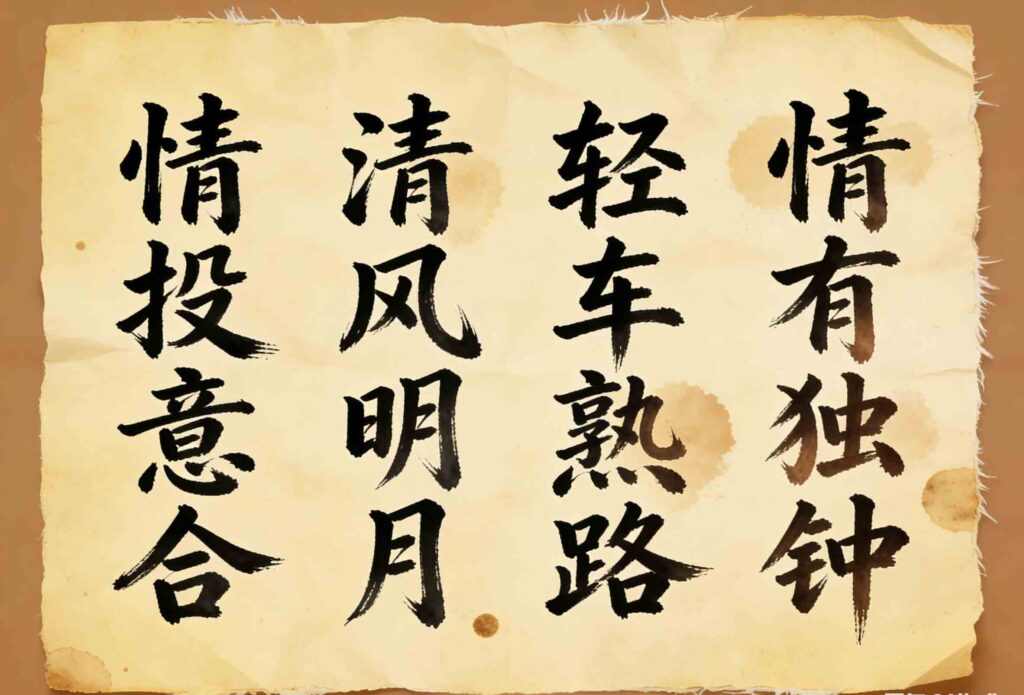
Why Four-Character Idioms with ‘Qing’ Are Essential for Learners
Idioms with the character qing (情 / 清 / 轻) cover emotions, clarity, and subtlety. These idioms make your speech and writing more elegant:
- They carry rich cultural context and historical stories.
- They help you express nuanced feelings that single words can’t capture.
- They are widely used in daily conversation, literature, and media.
Mastering these idioms is a key step to sounding like a native speaker.
Top 5 Four-Character Idioms with ‘Qing’ (With Stories & Examples)
1. 情不自禁 (qíng bù zì jīn)
- Meaning: Can’t help but (do something); overcome by emotion
- Origin: From ancient texts describing uncontrollable feelings
- Example: When she saw the old photo, she 情不自禁 shed tears.
2. 山清水秀 (shān qīng shuǐ xiù)
- Meaning: Beautiful mountains and clear waters (scenic landscape)
- Origin: Classic descriptions of natural beauty
- Example: The village is surrounded by 山清水秀 scenery.
3. 轻描淡写 (qīng miáo dàn xiě)
- Meaning: To downplay or describe something lightly
- Origin: Traditional painting and literary techniques
- Example: He 轻描淡写 mentioned his mistake, avoiding blame.
4. 情同手足 (qíng tóng shǒu zú)
- Meaning: As close as brothers (deep friendship)
- Origin: Stories of loyal companions in Chinese history
- Example: The two friends have been 情同手足 since childhood.
5. 一清二楚 (yī qīng èr chǔ)
- Meaning: Crystal clear; completely obvious
- Origin: Colloquial expression emphasizing clarity
- Example: The evidence made the truth 一清二楚.

How to Use Four-Character Idioms with ‘Qing’ in Daily Life
Using these idioms is simple:
- Start with 1–2 idioms per week to avoid confusion.
- Pair each idiom with a real-life example to remember it better.
- Use them in casual conversations or writing to practice fluency.
These idioms add depth to your language without sounding forced.
Where to Learn More of These Idioms
- Textbooks & Apps: Look for Chinese learning resources focused on chengyu (idioms).
- Stories & Media: Watch Chinese dramas or read short stories to see idioms in context.
- Flashcards: Create flashcards for these idioms to review daily.
Mastering these idioms will make your Chinese more elegant.
Conclusion: Master ‘Qing’ Idioms to Speak More Fluently
These idioms are more than just phrases—they are windows into Chinese culture and emotion. By learning them, you’ll not only expand your vocabulary but also gain a deeper understanding of how Chinese people express feelings and ideas. Start with the top 5 idioms above, and watch your language skills grow!
Want to master more Chinese idioms quickly? Get our Complete Chinese Idiom Learning Pack—includes flashcards, story guides, and practice exercises to help you speak fluently.
Get the Idiom Learning Pack now
For more background on Chinese four-character idioms, check out the Chinese idioms entry on Wikipedia.