If you’ve ever asked xiao guai meaning, you’re likely exploring casual Chinese vocabulary or daily slang. “Xiao guai” (乖巧) is a warm, versatile phrase that describes gentle, well-behaved people or things—making it a staple in both daily conversations and gentle compliments. This guide breaks down its exact meaning, pinyin, usage, and cultural context to help you use it naturally.
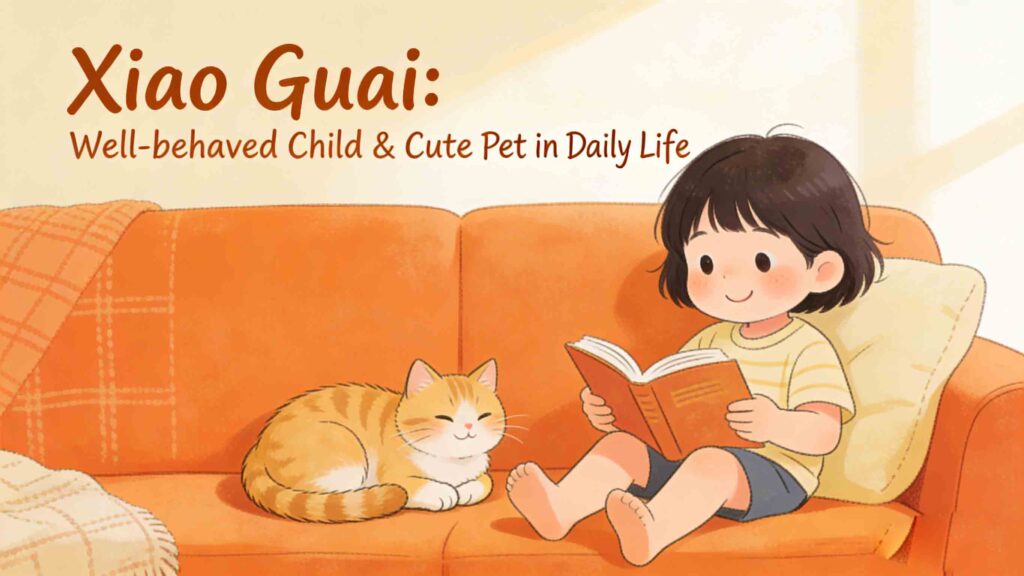
What Does “Xiao Guai” Mean Exactly?
Xiao guai (乖巧) is an adjective that combines two core meanings:
- Obedient/well-behaved (乖巧): Describes people (especially children) or animals that follow rules, are quiet, and easy to get along with.
- Cute/gentle/lovable (乖巧): Refers to a charming, endearing quality that makes someone or something likable.
Pinyin: qiāo guāi (first tone for 乖,first tone for 巧)
Literal breakdown: 乖 (obedient/gentle) + 巧 (clever/amiable) → combined as “gently obedient and lovable.”
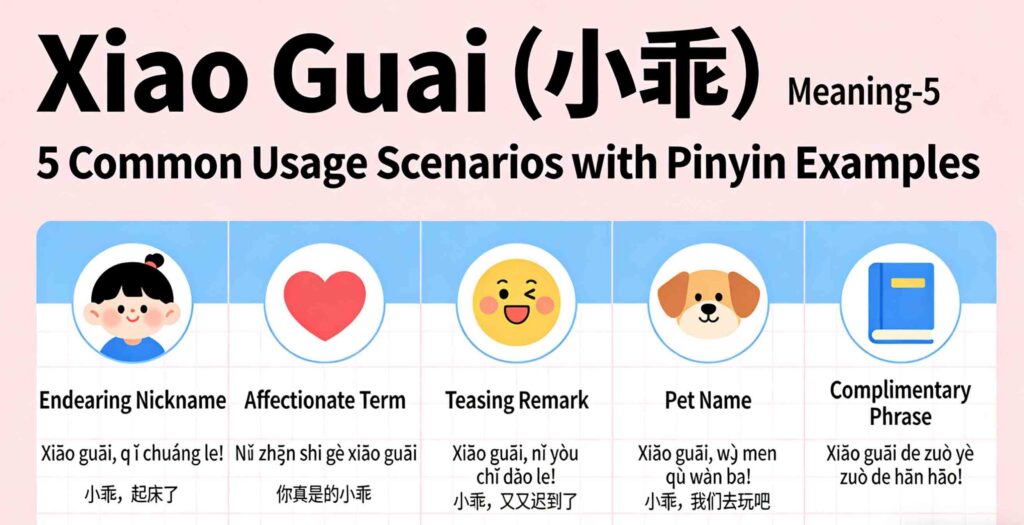
5 Common Scenarios to Use “Xiao Guai”
“Xiao guai” is used across daily life, with slight tone and context variations. Here are the 5 most useful scenarios:
1. Describing well-behaved children
The most common use—complimenting a child’s behavior.
- Example: Zhège xiǎo háizi hěn qiāo guāi, cóng lái bù nào pí.(This little child is very well-behaved; never throws tantrums.)
- Context: Parents, teachers, or relatives use this to praise kids.
2. Complimenting someone’s gentle personality
Used for adults (friends, partners, colleagues) to highlight their kind, easygoing nature.
- Example: Tā de xìnggé hěn qiāo guāi, rén jiā dōu xǐ huan tā.(Her personality is so gentle/amiable; everyone likes her.)
- Tone: Warm and sincere, not overly formal.
3. Describing cute pets/animals
“Xiao guai” works perfectly for calm, friendly pets (cats, dogs, rabbits).
- Example: Wǒ jiā de māo tài qiāo guāi le, zǒng shì tiān tiān wō zài wō lǐ.(My cat is so cute/calm; always curls up in its bed.)
- Note: Focuses on the pet’s gentle demeanor, not just appearance.
4. Casual flirting/affection (romantic context)
In close relationships, “xiao guai” becomes a sweet, playful term of endearment.
- Example: Nǐ zhège xiǎo guāi, zǒng shì ràng wǒ xīn téng.(You’re such a cute/gentle person, always making me soft.)
- Tone: Playful and affectionate, common between couples or close friends.
5. Describing well-behaved objects/things
Rare but natural—used for small, neat items that feel “tidy and endearing.”
- Example: Zhège xiǎo bǐ dài tài qiāo guāi, yòng qǐ lái hěn fāngbiàn.(This small pencil case is so cute/tidy; very convenient to use.)
Related Phrases & Synonyms for “Xiao Guai”
Expand your vocabulary with these related terms, each with a slight nuance:
1. 听话 (tīng huà)
- Meaning: Obedient
- Usage: Focuses only on “following orders” (more formal for kids)
2. 可爱 (kě ài)
- Meaning: Cute
- Usage: Broader than 乖巧;describes any cute thing/person
3. 温柔 (wēn róu)
- Meaning: Gentle
- Usage: Describes soft, mild personalities (more formal than 乖巧)
4. 乖宝宝 (guāi bǎo bao)
- Meaning: Cute baby/child
- Usage: A playful, affectionate term for kids or loved ones
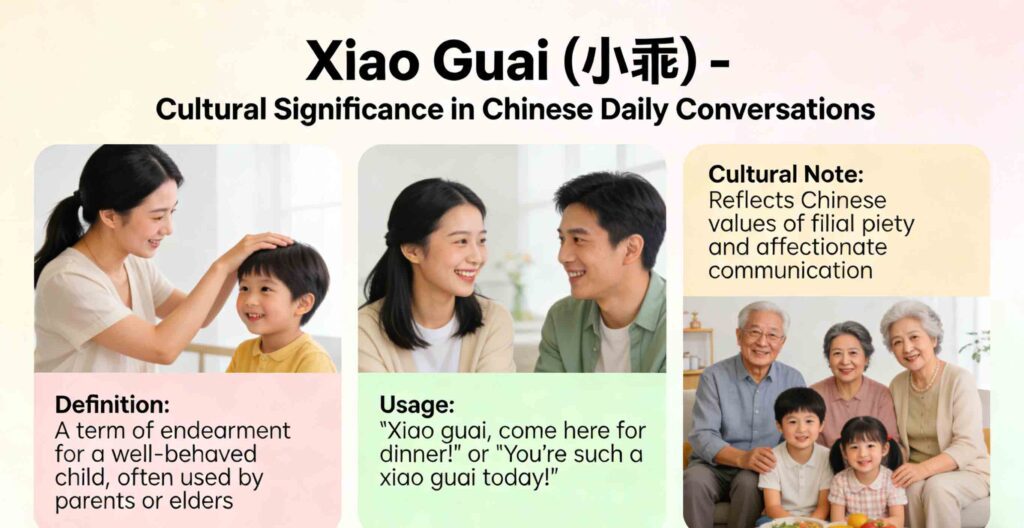
Why “Xiao Guai” Is Unique in Chinese Culture
“Xiao guai” stands out from other Chinese adjectives because it blends “obedience” and “cuteness”—a trait highly valued in Chinese daily life.
- For children: It reflects the cultural ideal of “well-mannered, respectful kids.”
- For adults: It’s a subtle compliment—no one wants to be called “too obedient,” but “xiao guai” implies kindness and approachability.
- For pets/objects: It highlights the “small and endearing” quality, a common cultural preference for cute, manageable things.
How to Pronounce “Xiao Guai” Correctly
Pronunciation is key to being understood—here’s a breakdown:
- Xiao (乖): guāi (first tone, flat and high) → similar to “gwai” (g sound + “way”).
- Guai (巧): qiǎo (third tone, falling then rising) → similar to “chee-ow” (soft, rising tone).
- Full phrase: guāi qiǎo (two syllables, equal stress; no pause between words).
Practice sentence: Wǒ xǐ huan tā de guāi qiǎo xìnggé. (I like her gentle/amiable personality.)
Common Mistakes to Avoid
- Using it for loud/rowdy people: “Xiao guai” only describes calm, well-behaved energy—never use it for someone who’s hyper or rude.
- Confusing 乖巧 (guāi qiǎo) with 奇怪 (qí guài): 奇怪 means “strange/weird”—a common mix-up for beginners!
- Overusing in formal settings: “Xiao guai” is casual. Use it only for friends, family, or casual conversations (avoid in formal work meetings).
Final Thoughts on “Xiao Guai” Meaning
In the end, xiao guai meaning is far more than “obedient” or “cute”—it’s a cultural phrase that captures warmth, approachability, and endearing charm. Whether you’re praising a well-behaved child, complimenting a friend’s personality, or gushing over a cute pet, “xiao guai” is a go-to phrase for warm, genuine interactions in Chinese.
Mastering its usage will help you connect more naturally with Chinese speakers and add a sweet, authentic touch to your conversations.
If you want to learn more interesting stories behind Chinese culture, you can read The Idiom Story of Shou Zhu Dai Tu.
For more wisdom from daily life, check out our collection of Chinese Idiom Stories About Life.
For more linguistic background about Mandarin phrases, you can visit the Wikipedia page about Standard Chinese.