If you’ve ever asked what does jiayou literally mean, you’re exploring one of China’s most iconic phrases. Jiayou (加油) is far more than a simple expression—it’s a cultural symbol of encouragement, with a literal meaning rooted in daily life. This guide breaks down its literal translation, origin, and real-world uses to help you master it.
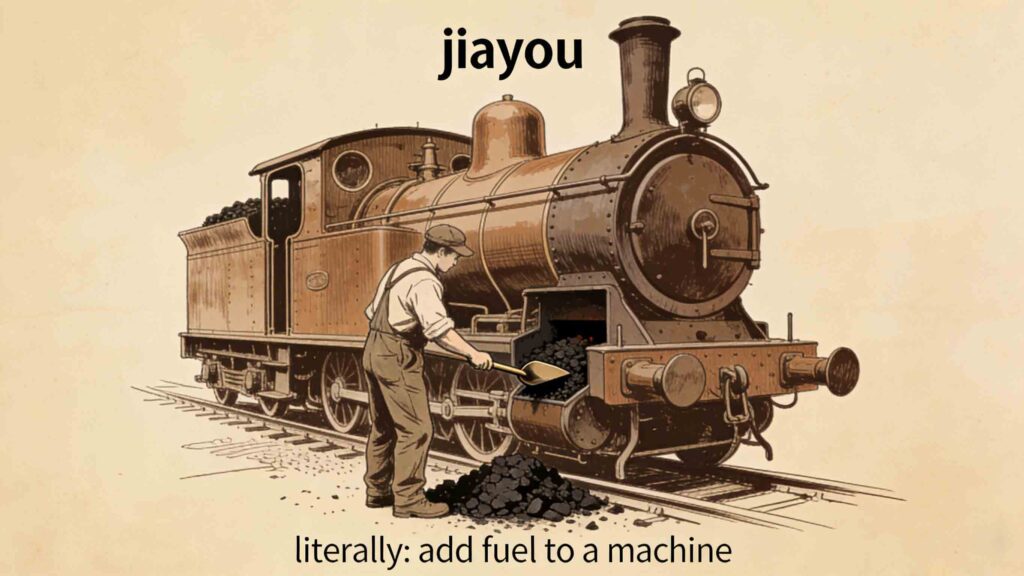
What Does “Jiayou” Literally Mean?
The literal meaning of jiayou is simple to break down.
- Jia (加): Means add or increase.
- You (油): Means oil, fuel, or gasoline.
Together, jiayou literally means “add fuel” or “pour on oil.”
This literal translation comes from practical daily actions: adding oil to machines to help them run better. Over time, it grew into a figurative phrase to encourage others to keep trying.
The Origin of “Jiayou”
The phrase jiayou has a clear, real-life origin.
In early daily life, people added oil to lamps, stoves, and carts to keep them working smoothly.
As mechanical tools became more common, the action of “adding fuel” evolved into a metaphor.
Saying jiayou to someone became a way to “add energy” to them—like fueling a machine to keep going.
This practical origin made jiayou a natural, warm way to encourage others.
Common Scenarios to Use “Jiayou”
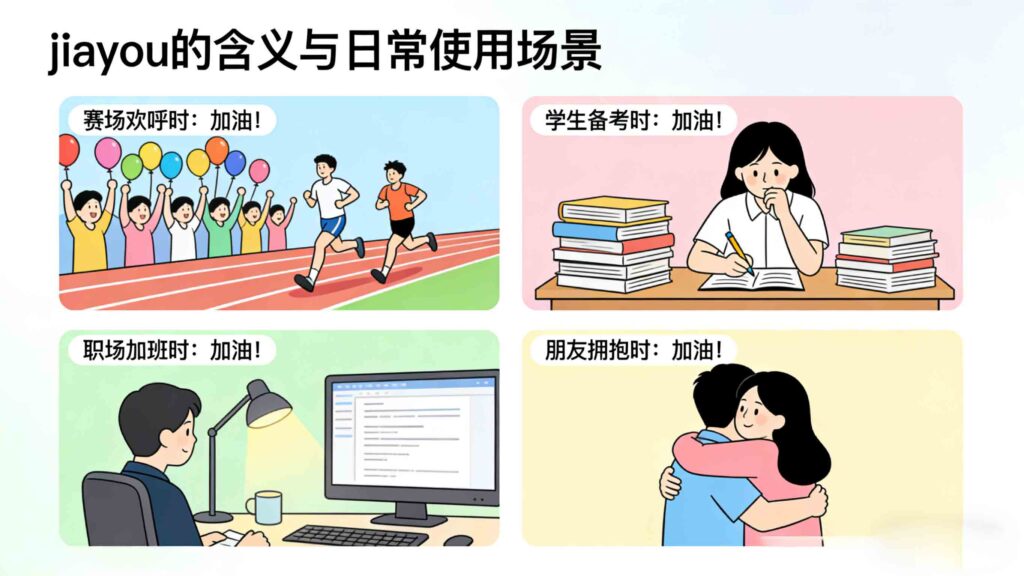
Jiayou is used in nearly every supportive situation. Here are its most common uses:
1. Cheering at sports events
At games, matches, or competitions, people shout jiayou to support teammates or athletes.
Example: Jiayou! Zhongguo jiayou! (Come on! Go China!)
2. Encouraging friends or family
When someone is studying, working hard, or facing difficulties, use jiayou to show support.
Example: Kao shi jiayou! (Good luck on your exam!)
3. Comforting someone who is tired
After a long day or during fatigue, jiayou can offer comfort and motivation.
Example: Zai jian dian jiayou! (Hang in there and keep going!)
4. Pushing someone to finish a task
For small challenges or daily goals, jiayou helps encourage steady progress.
Example: Zuo wan le jiayou! (Finish it up—keep going!)
Jiayou vs. English Phrases
what does jiayou literally mean is “add fuel,” but its daily usage overlaps with several English expressions:
- Come on / Go for it: For cheering at games or quick encouragement.
- Keep going / Hang in there: For supporting someone through hard times.
- You’ve got this: For expressing confidence in someone’s efforts.
- Good luck: For wishes before a challenge or exam.
None of these English phrases capture the literal “add fuel” meaning, but they reflect its emotional tone.
Why “Jiayou” Matters in Chinese Culture
Jiayou is a cultural bridge.
It shows care, support, and teamwork without being overly formal.
In Chinese daily life, it’s used everywhere—from schools to stadiums, from friends to strangers.
Mastering jiayou helps you connect more naturally with Chinese speakers and understand their values of effort and encouragement.
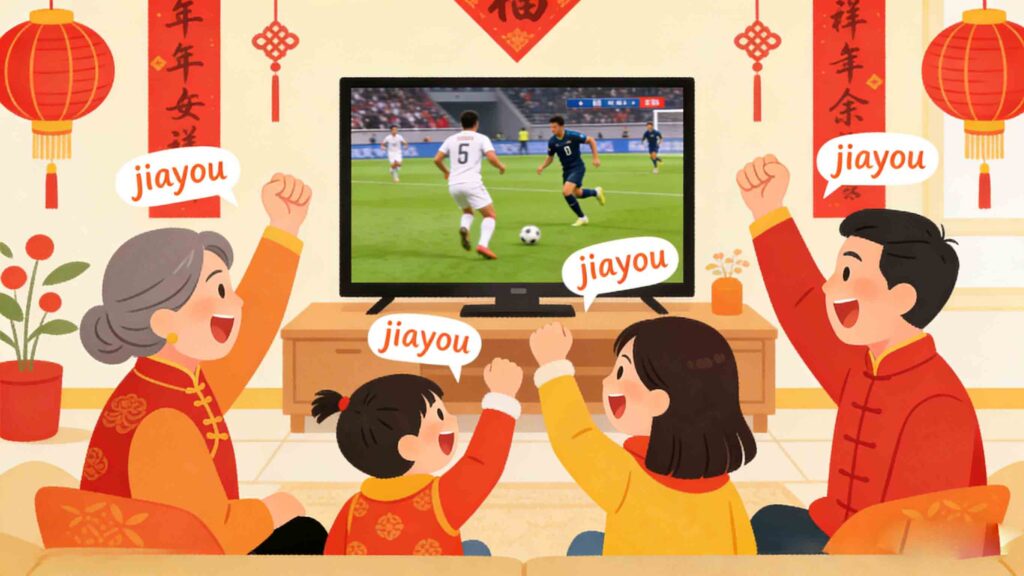
Final Thoughts on What Does Jiayou Literally Mean
In the end, what does jiayou literally mean is “add fuel,” but its true value lies in its cultural meaning.
It’s a small phrase that carries big warmth: support, motivation, and hope.
Whether you’re cheering at a game, encouraging a friend, or learning Chinese, jiayou is a phrase you’ll use often.
It shows that effort matters, and support makes challenges easier to face.
Related Content & Further Reading
If you enjoyed learning about what does jiayou literally mean and its cultural significance, here are more valuable resources to explore:
For more classic stories that teach moral values, read our collection of 15 Classic Chinese Idiom Stories for Children.
Discover the wisdom of nature and symbolism in 10 Popular Animal-Based Chinese Idioms.
For additional linguistic background and definitions, visit the official Wikipedia page for Standard Chinese.