If you’re asking What are some common Chinese idioms, you’re in the right place. Chinese idioms, known as chengyu, are the soul of the language. These common Chinese idioms carry thousands of years of history and wisdom. Below are 20 common Chinese idioms that every learner should know.
1. 一心一意 (Yì Xīn Yí Yì) – Wholeheartedly
Meaning: To be completely focused on one thing; single-minded.
Story: This idiom emphasizes dedication. It describes someone who puts all their energy into a goal, without distraction.
Usage: She studied yī xīn yí yì for her exam and got a perfect score.
2. 三心二意 (Sān Xīn Èr Yì) – Half-hearted
Meaning: To be indecisive or easily distracted; not focused.
Story: It’s the opposite of “一心一意.” It warns against spreading your attention too thin.
Usage: Don’t be sān xīn èr yì—finish your homework first.
3. 四面八方 (Sì Miàn Bā Fāng) – From all directions
Meaning: Coming from every side; everywhere.
Story: Used to describe a large, widespread group or event.
Usage: People came from sì miàn bā fāng to see the festival.
4. 五光十色 (Wǔ Guāng Shí Sè) – Colorful and dazzling
Meaning: Bright, vibrant, and full of variety.
Story: Originally used to describe the glow of gemstones. Now it’s for any lively, colorful scene.
Usage: The night market was wǔ guāng shí sè with lights and snacks.
5. 六神无主 (Liù Shén Wú Zhǔ) – Flustered and at a loss
Meaning: To be so confused or nervous that you don’t know what to do.
Story: From traditional Chinese medicine, where “six spirits” govern emotions. When unmoored, you feel lost.
Usage: When she lost her keys, she was liù shén wú zhǔ.
6. 七上八下 (Qī Shàng Bā Xià) – Anxious and nervous
Meaning: A fluttering, uneasy feeling in the stomach; being on edge.
Story: Uses numbers to mimic the feeling of a heart jumping up and down.
Usage: I was qī shàng bā xià before my job interview.
7. 八面玲珑 (Bā Miàn Líng Lóng) – Smooth and sociable
Meaning: To be charming and able to get along with everyone.
Story: Originally described delicate jade. Now it means a person who is tactful and popular.
Usage: He is bā miàn líng lóng and makes friends easily.
8. 九牛一毛 (Jiǔ Niú Yì Máo) – A drop in the bucket
Meaning: A tiny, insignificant part of a whole.
Story: Compares one hair from nine oxen to a huge amount—meaning almost nothing.
Usage: The cost is jiǔ niú yì máo compared to his wealth.
9. 十全十美 (Shí Quán Shí Měi) – Perfect in every way
Meaning: Flawless; without any faults.
Story: Represents the ideal of complete perfection.
Usage: No one is shí quán shí měi—we all make mistakes.
Many learners ask What are some common Chinese idioms. If you want to know What are some common Chinese idioms, these 20 phrases are the perfect answer.
10. 百闻不如一见 (Bǎi Wén Bù Rú Yí Jiàn) – Seeing is believing
Meaning: You can’t fully understand something until you see it yourself.
Story: An ancient saying that emphasizes direct experience over hearsay.
Usage: I heard the mountain was beautiful, but bǎi wén bù rú yí jiàn—it’s even more stunning in person.
11. 千方百计 (Qiān Fāng Bǎi Jì) – By every possible means
Meaning: To try all methods to achieve a goal.
Story: Literally “a thousand plans and a hundred tricks.”
Usage: She tried qiān fāng bǎi jì to fix her broken bike.
12. 万无一失 (Wàn Wú Yì Shī) – Absolutely safe
Meaning: No chance of failure; completely reliable.
Story: Means “ten thousand chances, not one mistake.”
Usage: The security system is wàn wú yì shī.
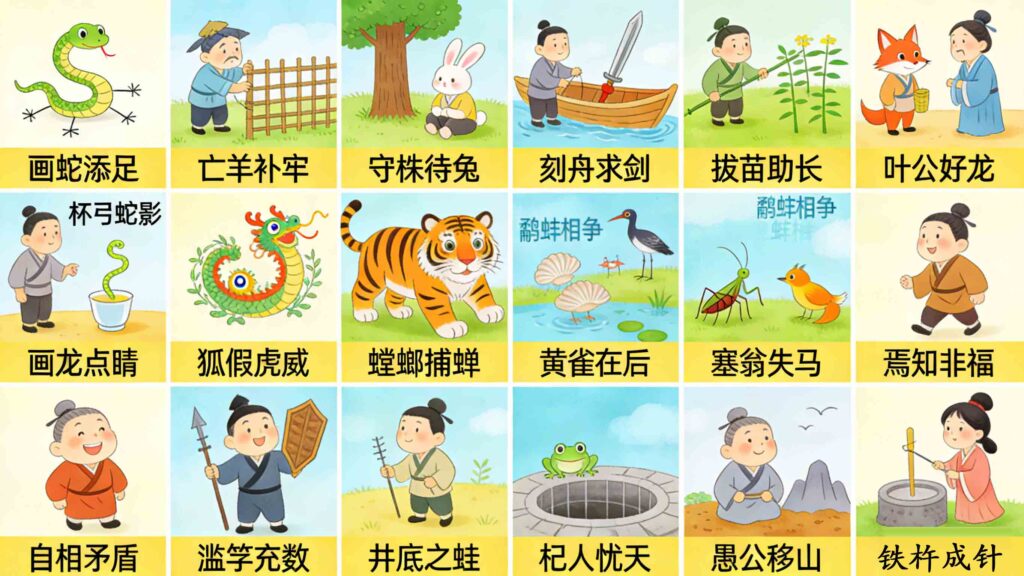
13. 画蛇添足 (Huà Shé Tiān Zú) – Gilding the lily
Meaning: To do something unnecessary and ruin a good thing.
Story: A man drew a snake and added legs, making it not a snake anymore.
Usage: Adding extra sugar to the cake was huà shé tiān zú—it was already sweet enough.
14. 守株待兔 (Shǒu Zhū Dài Tù) – Waiting for a windfall
Meaning: To rely on luck instead of working; being lazy.
Story: A farmer waited by a tree for another rabbit to hit it, instead of farming.
Usage: You can’t just shǒu zhū dài tù—you have to work hard.
15. 刻舟求剑 (Kè Zhōu Qiú Jiàn) – Stubborn and inflexible
Meaning: To use outdated methods that no longer work.
Story: A man marked his boat where his sword fell, then looked for it there later.
Usage: His way of thinking is like kè zhōu qiú jiàn—it’s too old.
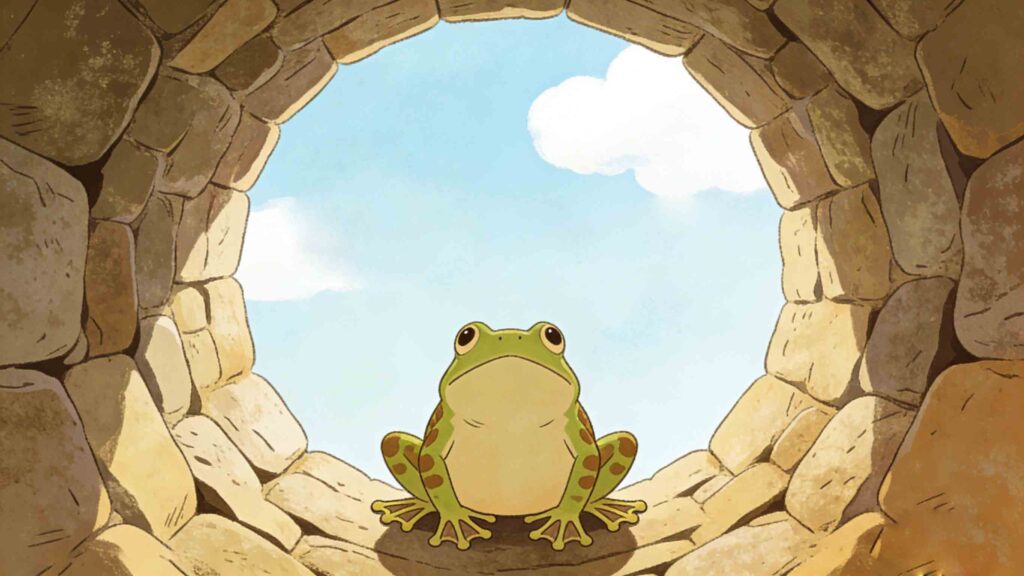
16. 井底之蛙 (Jǐng Dǐ Zhī Wā) – A frog in a well
Meaning: Someone with a narrow, limited view of the world.
Story: A frog in a well thought the sky was only as big as the well’s opening.
Usage: Traveling will help you stop being a jǐng dǐ zhī wā.
17. 对牛弹琴 (Duì Niú Tán Qín) – Casting pearls before swine
Meaning: To talk to someone who can’t understand or appreciate what you’re saying.
Story: A musician played the qin to a cow, which ignored him.
Usage: Explaining quantum physics to a child is like duì niú tán qín.
18. 狐假虎威 (Hú Jiǎ Hǔ Wēi) – Basking in reflected glory
Meaning: To use someone else’s power to bully others.
Story: A fox walked behind a tiger, scaring other animals—they feared the tiger, not the fox.
Usage: He is just a hú jiǎ hǔ wēi, relying on his boss’s influence.
19. 亡羊补牢 (Wáng Yáng Bǔ Láo) – Better late than never
Meaning: To fix a problem after it happens, before it gets worse.
Story: A shepherd fixed his pen after some sheep ran away.
Usage: It’s never too late to wáng yáng bǔ láo—start studying now.
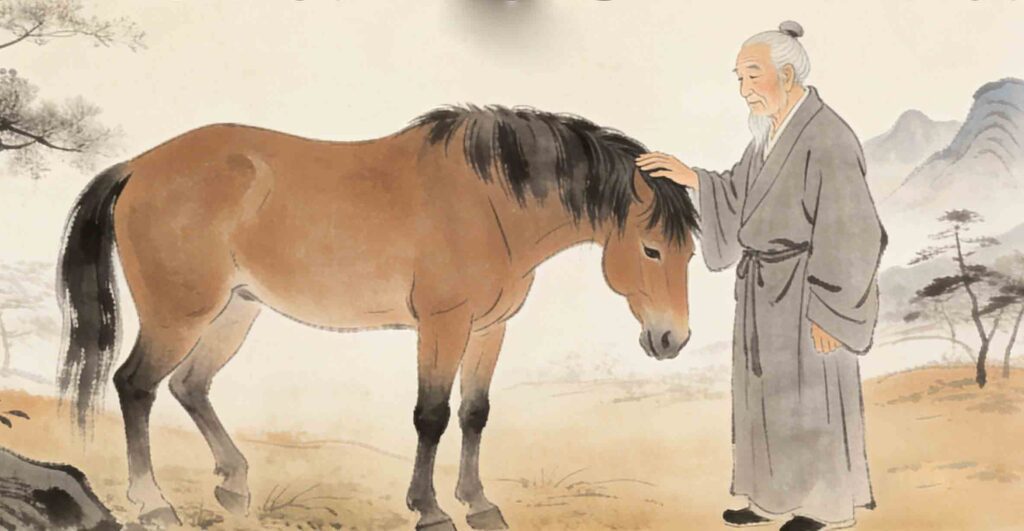
20. 塞翁失马 (Sài Wēng Shī Mǎ) – A blessing in disguise
Meaning: A bad thing can turn into a good thing, and vice versa.
Story: An old man lost his horse, but it came back with another horse. Later, his son broke his leg riding it, which saved him from being drafted into war.
Usage: Losing his job was a sài wēng shī mǎ—he found a better one.
Why Common Chinese Idioms Are Essential for Learners
Learning common Chinese idioms is a key step to sounding more natural in Chinese,Common Chinese idioms are more than just phrases. They make your speech and writing more vivid and expressive. They also help you understand Chinese culture and way of thinking. For language learners, mastering these idioms is a key step to sounding like a native speaker.
Final Thoughts on Common Chinese Idioms
Learning common Chinese idioms helps you speak more vividly. These phrases connect you to Chinese culture. Mastering common Chinese idioms makes your Chinese more natural.
More Resources for Learning Common Chinese Idioms
- Learn Chinese idioms with numbers
- Funny Chinese idioms for daily use
- Inspirational Chinese idioms about hard work
For more details, you can visit Wikipedia: Chengyu.