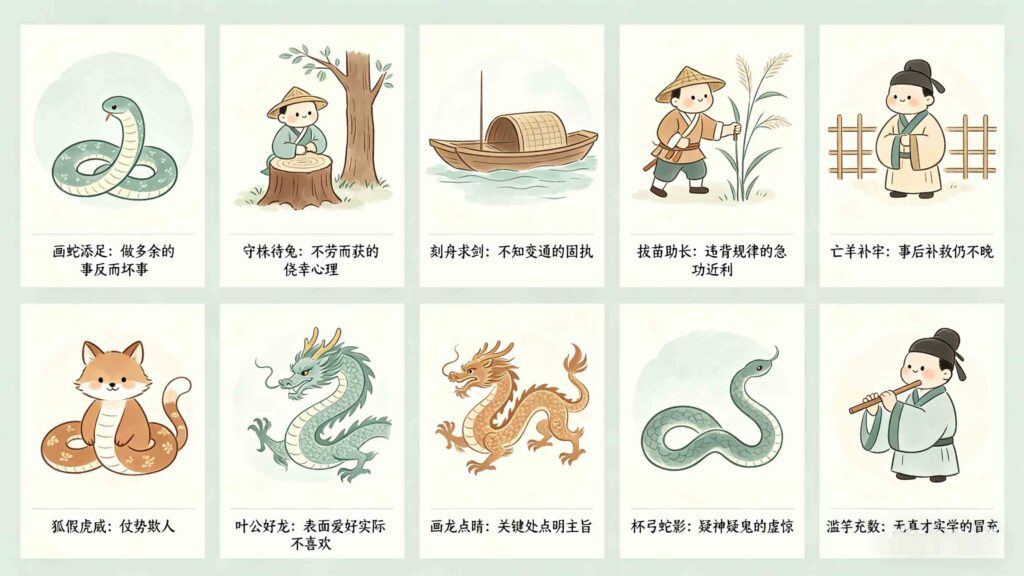
Many people who start learning Chinese run into the same problem: china idiom looks short, but feels hard to understand.
Most materials only show the four characters, without stories or simple explanations.
You see the phrase, but you have no idea where it comes from or how to use it.
That’s the biggest pain for beginners.
Today, we’ll talk about 10 common and useful china idiom expressions.
Each one comes with a clear story, simple meaning, and real-life usage.
If you want more examples and translations, you can also check our complete guide to Chinese idioms for more detailed learning.
What Is China Idiom?
China idiom, often called chengyu, is a traditional fixed phrase in Chinese.
Most are four characters long.
Each idiom carries history, culture, and a life lesson.
Native speakers use them in daily conversations, writing, and speeches.
Learning china idiom helps you:
- Sound more natural when speaking Chinese
- Understand movies, books, and daily talks easily
- Learn Chinese culture and history in a fun way
- Improve vocabulary quickly
The key is not to memorize, but to understand the story behind it.
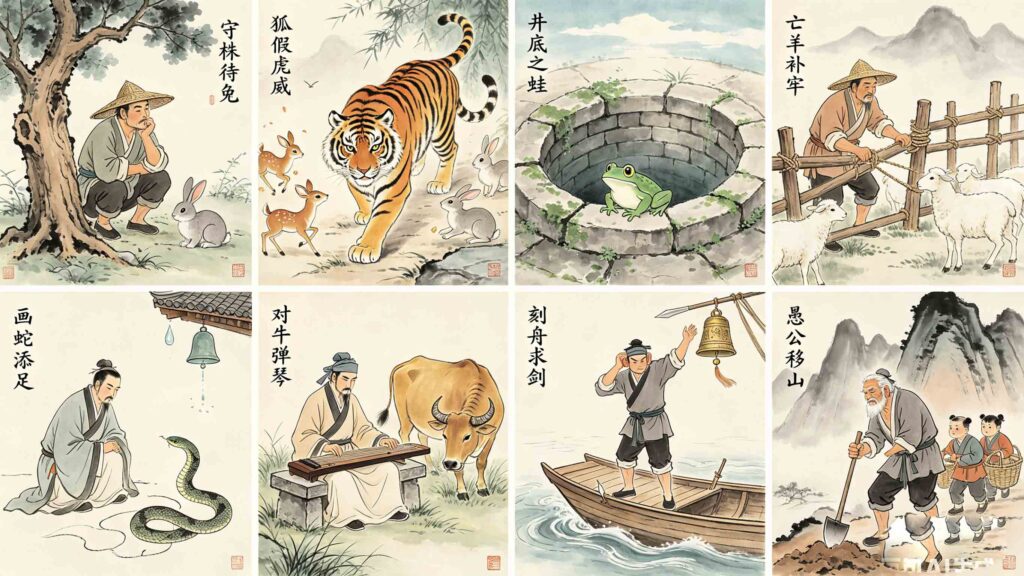
10 Essential China Idiom You Must Learn
1. 守株待兔 (Shǒu Zhū Dài Tù)
Story: A farmer saw a rabbit hit a tree and die.
He stopped working and waited by the tree every day for more rabbits.
Meaning: Relying on luck instead of hard work.
2. 狐假虎威 (Hú Jiǎ Hǔ Wēi)
Story: A fox walked in front of a tiger.
Other animals ran away because of the tiger.
The fox said he was the king of animals.
Meaning: Using others’ power to frighten people.
3. 井底之蛙 (Jǐng Dǐ Zhī Wā)
Story: A frog lived in a well.
He thought the well was the whole world.
A sea turtle told him how big the ocean was.
Meaning: Having a very narrow view.
4. 亡羊补牢 (Wáng Yáng Bǔ Láo)
Story: A farmer lost sheep because his fence was broken.
He fixed the fence at once.
No more sheep were lost.
Meaning: It’s never too late to correct a mistake.
5. 水滴石穿 (Shuǐ Dī Shí Chuān)
Story: Water keeps dripping on a stone.
After a long time, the stone is worn through.
Meaning: Small and consistent effort brings big results.
6. 画蛇添足 (Huà Shé Tiān Zú)
Story: A man drew a snake and added feet to it.
He lost the competition because snakes have no feet.
Meaning: Doing extra things that ruin the result.
7. 对牛弹琴 (Duì Niú Tán Qín)
Story: A musician played beautiful music to a cow.
The cow paid no attention.
Meaning: Wasting words on someone who cannot understand.
8. 刻舟求剑 (Kè Zhōu Qiú Jiàn)
Story: A man dropped his sword into the river.
He marked the boat and looked for the sword later.
Meaning: Being stubborn and not facing changes.
9. 掩耳盗铃 (Yǎn Ěr Dào Líng)
Story: A man stole a bell and covered his ears.
He thought others could not hear it.
Meaning: Fooling only yourself.
10. 愚公移山 (Yú Gōng Yí Shān)
Story: An old man tried to move two big mountains.
He kept working every day.
Meaning: Persistence can overcome any difficulty.
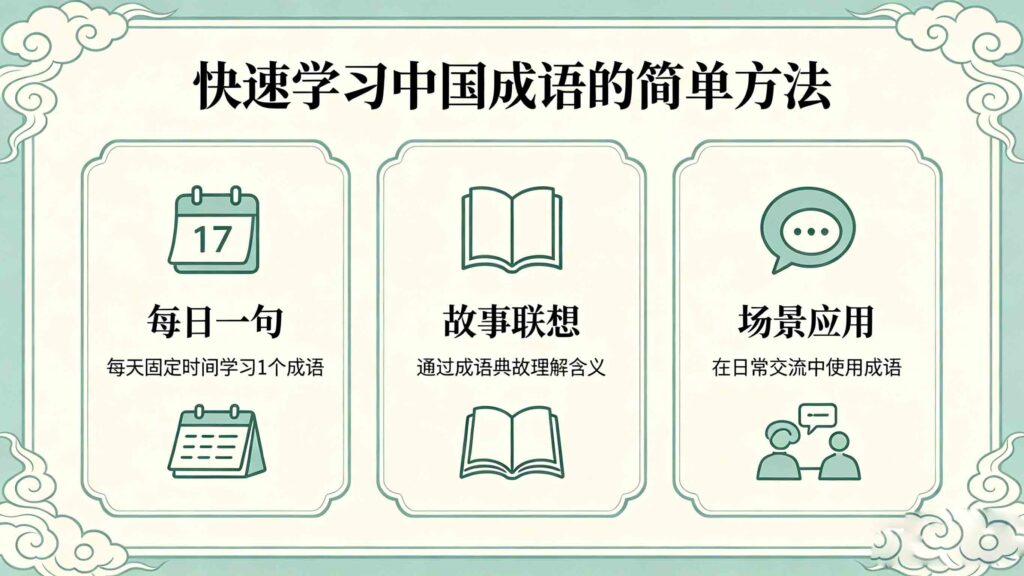
How to Learn China Idiom Easily
Many learners give up because they try to memorize too many at once.
Here are simple ways to learn china idiom well:
- Learn one idiom at a timeDon’t rush. Master one before moving on.
- Focus on the storyStories help you remember meanings naturally.
- Use it in real sentencesPractice makes it stay in your mind.
- Check complete examplesOur collection of Chinese idioms provides more sentences and daily usage.
- Review regularlyRepeat 3–5 idioms each week.
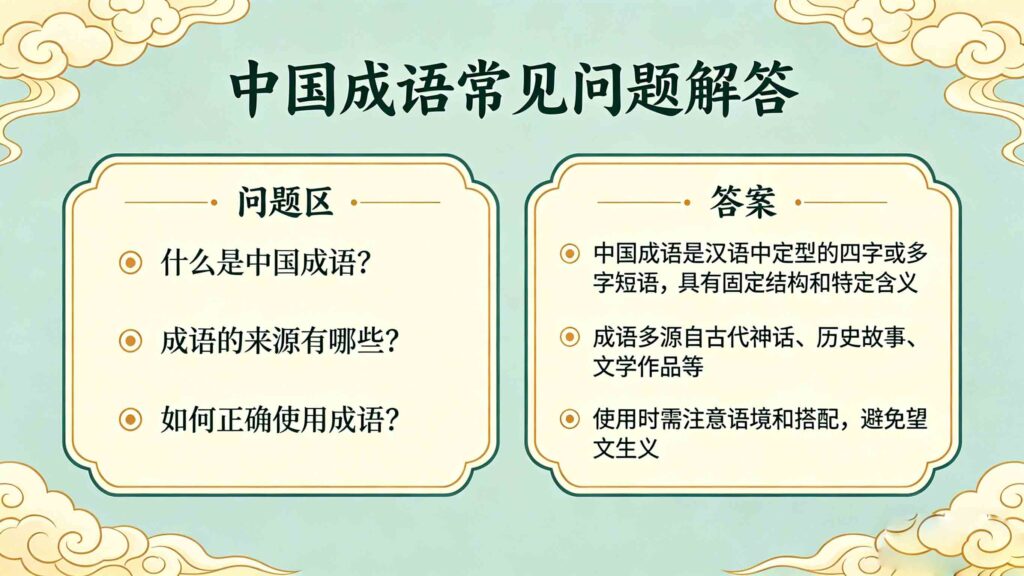
Frequently Asked Questions (FAQ)
Q1: What is china idiom?
A: China idiom refers to traditional Chinese fixed phrases, mostly four characters. They carry cultural stories and specific meanings. Native speakers use them widely in life and study.
Q2: Do I need to learn china idiom as a beginner?
A: Yes. Basic china idiom helps you understand Chinese better and makes your language more natural. Start with 10–15 common ones.
Q3: Can I use china idiom in daily conversation?
A: Definitely. Native speakers use simple idioms every day. Using them properly makes you sound more fluent.
Q4: How many china idiom should I learn per week?
A: 2–3 is enough. Quality is more important than speed. Understand and use them, not just memorize.
Q5: Where can I learn more china idiom?
A: You can read stories, watch short videos, and check our complete guide about Chinese idioms for more examples and explanations.
Conclusion
China idiom is not as difficult as many people think.
With simple stories and clear meanings, anyone can learn and use them.
The key is to take it step by step and focus on understanding.
Once you master these 10 basic idioms, you will find Chinese conversations much easier to follow.
Keep practicing, and you will make great progress.
Learning these 10 basic china idiom is just the start of your journey into Chinese language and culture.
If you want to dive deeper into idioms that teach motivation, persistence, and the power of hard work, our 10 hardworking chinese idiom stories pdf resource pack is the perfect next step.
It’s packed with kid-friendly stories, clear meanings, and printable worksheets, designed to help learners of all ages build a strong, lasting understanding of Chinese idioms.
Chinese idioms are far more than just phrases—they’re living pieces of history that connect generations of Chinese speakers.
Whether you’re a beginner just starting out, a parent teaching your kids, or a teacher looking for classroom materials, mastering these idioms will open up a whole new world of understanding.
To learn more about the rich history and cultural significance of these traditional phrases, you can visit the Wikipedia page for Chengyu: