Hai qun zhi ma (害群之马) means a person whose careless or selfish actions harm the group they belong to. The idiom comes from ancient horse-keeping wisdom: a single agitated or sick animal can panic a whole herd, spread disease, and cause injuries. Today, adults and children use this idiom to describe anyone whose behavior disrupts community harmony — from the uncooperative teammate to the student who interrupts class for everyone.
What Does Hai Qun Zhi Ma Mean?
The core message of this idiom is simple: individual actions have collective consequences. When one person acts selfishly — cutting in line, cheating in a game, refusing to share resources — the entire group feels the negative effects. The idiom gives children and adults a non-shaming way to name this behavior and discuss responsibility. Saying someone is acting like the chengyu opens a door to reflection and better choices.

The Ancient Story Behind Hai Qun Zhi Ma
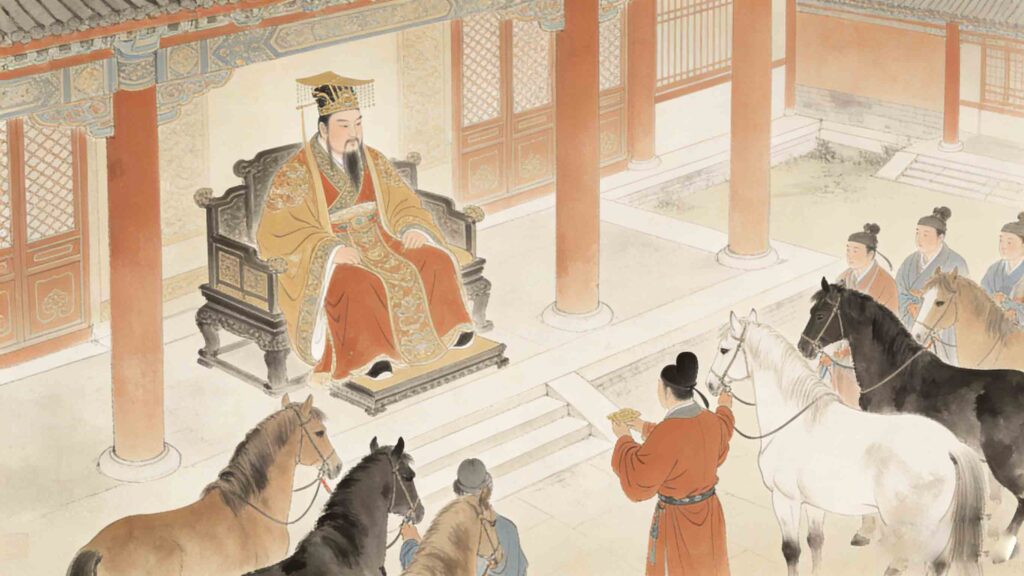
The tale originates from the classical text Xuan Er Zhang Ju (宣耶大棠). King Xuan of Qi gathered a thousand fine horses from across his kingdom. When asked which was truly exceptional, the experts named not the fastest or strongest, but the one that never abandoned its companions. A great horse, they explained, stays with the herd. The king realized the greatest threat to any group comes from a member who breaks harmony. This lesson became hai qun zhi ma, passed down as a guide to collective responsibility.
Teaching Children About Group Responsibility
Parents and teachers can use this idiom to help children understand that freedom carries responsibility. A child who monopolizes a shared toy, talks over others, or refuses to help with chores is behaving like hai qun zhi ma. Naming it gently, without shame, invites children to see how their choices affect people around them. The horse-herd image resonates with children as young as five and applies directly to their social lives.
Everyday Examples of Hai Qun Zhi Ma Behavior
Real situations help children remember this lesson:
- At home: One sibling refuses to help clean up after dinner, leaving the whole family with extra work.
- In class: One student constantly interrupts, eating into everyone’s learning time.
- On a team: One player ignores the game plan and acts solo, costing the team the match.
Related Chinese Idiom Stories
More stories about character and community for young learners:
- Kuang Heng Bore a Hole — A poor boy’s dedication to reading, despite having no light, teaches perseverance and the love of learning.
- Chinese Idioms in English — A guide to understanding and using chengyu in everyday English writing and conversation.
- 10 Chinese Idioms About Hard Work — Diligent scholars and farmers whose effort transformed their lives — the positive mirror of hai qun zhi ma.
- 15 Classic Chinese Idioms for Kids — Bilingual stories with pinyin and printable activities for young learners.
- 10 Children’s Chinese Animal Idiom Stories — Animal characters make classic idioms vivid and memorable for children.
To explore the broader tradition of Chinese four-character idioms, visit the history of Chinese idioms on Wikipedia.