Chinese idioms (chengyu) are the heart of traditional Chinese culture, packed with stories and wisdom passed down for thousands of years. Learning Chinese idioms in English helps you connect with native speakers, understand cultural nuances, and express ideas more vividly. Whether you’re a beginner or an advanced learner, this guide will break down how to use and appreciate these timeless phrases.
What Are Chinese Idioms in English?
Chinese idioms are short, fixed phrases—usually four characters long—with meanings that go beyond their literal translation. When we talk about Chinese idioms in English, we’re referring to their translated explanations, story contexts, and usage examples that make them accessible to English speakers.
Unlike proverbs in other languages, Chinese idioms often come from historical events, fables, or classic texts. Learning them isn’t just about vocabulary—it’s about unlocking the stories behind the words.
Popular Chinese Idioms in English & Their Stories
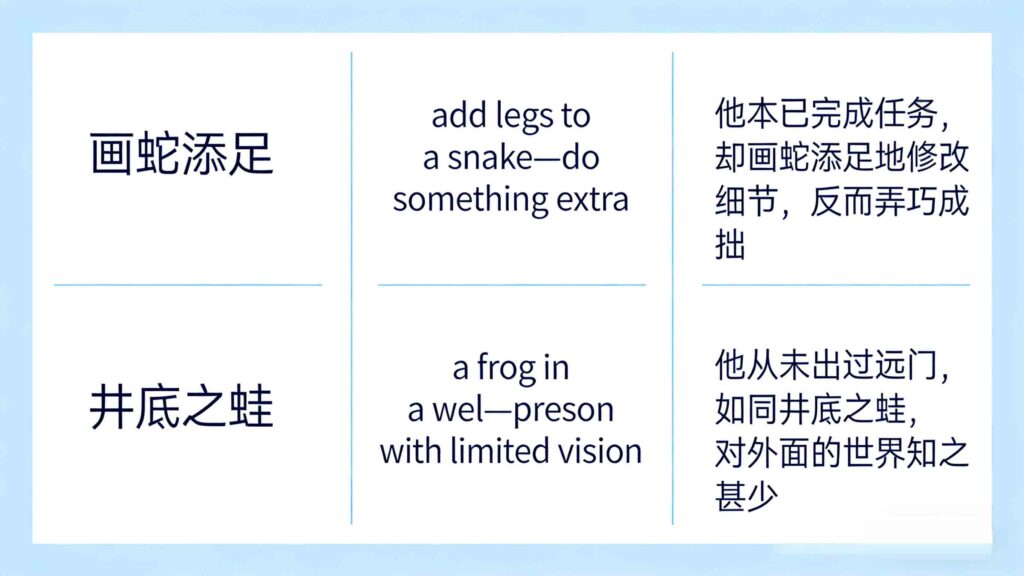
Let’s explore some widely used Chinese idioms in English, with clear meanings and the tales that inspired them.
1. 一马当先 (Yī Mǎ Dāng Xiān)
- English meaning: To take the lead; to be the first to act.
- Story: This idiom comes from ancient battlefields, where the leading horse would charge ahead of the army. Today, it describes someone who takes initiative and guides others.
- Example: She always takes the lead in team projects, just like the leading horse in a race.
2. 马到成功 (Mǎ Dào Chéng Gōng)
- English meaning: Instant success; to achieve victory quickly.
- Story: Soldiers used this phrase to wish each other luck before battles, as horses were seen as a symbol of speed and victory. Now it’s a common greeting for exams or new projects.
- Example: We wish you immediate success in your new job—may you achieve it as quickly as a horse arriving at the battlefield.
3. 汗马功劳 (Hàn Mǎ Gōng Láo)
- English meaning: Great contributions made through hard work.
- Story: It refers to the sweat and effort of war horses, symbolizing the tireless work of soldiers or contributors to a cause.
- Example: His years of hard work have earned him great credit in the company.
4. 走马观花 (Zǒu Mǎ Guān Huā)
- English meaning: To glance at things briefly; to skim the surface.
- Story: A poet once viewed flowers while riding a fast horse, only catching a quick glimpse. It warns against superficial observation.
- Example: A quick tour of the museum is just a superficial look—you can’t truly appreciate the art in such a short time.

How to Learn Chinese Idioms in English Effectively
Learning Chinese idioms in English doesn’t have to be overwhelming. Follow these simple steps to build your vocabulary and use them naturally:
- Start with common idioms: Focus on 5-10 high-frequency phrases first, like the ones above, to build confidence.
- Learn the story: Understanding the origin of an idiom helps you remember its meaning and use it correctly.
- Practice in context: Write short sentences or dialogues using the idioms to reinforce your learning.
- Listen and repeat: Use audio resources to hear native speakers pronounce the idioms, then try using them in conversations.

Why Chinese Idioms in English Matter for Learners
Mastering Chinese idioms in English offers several key benefits:
- Cultural insight: Idioms reveal Chinese values like hard work, perseverance, and respect for history.
- Better communication: Using idioms makes your speech and writing more vivid and natural, helping you connect with native speakers.
- Exam preparation: Many Chinese language tests (like HSK) include idioms, so knowing them boosts your score.
- Business use: Idioms are common in professional settings, showing cultural awareness and fluency.
Final Thoughts
Chinese idioms in English are more than just words—they’re a window into Chinese culture and a powerful tool for language learning. By learning their stories and practicing their usage, you’ll not only expand your vocabulary but also deepen your understanding of the people and traditions behind the language.
Whether you’re learning Chinese for travel, study, or work, taking the time to master these idioms will make your journey more rewarding.
If you love classic stories for kids, check out our 15 Kids Chinese Idiom Stories Pack—a fun, illustrated resource to introduce children to chengyu.
For tales of hard work and perseverance, explore our 10 Diligence Stories Pack—featuring inspiring idioms about effort and success.
For more background on Chinese idiom origins, you can refer to the Wikipedia entry on Chinese Chengyu.
1 thought on “Chinese Idioms in English: A Guide to Understanding & Using Chengyu”